
Civil Society Development and Anti-Corruption Governance Practices Studied in Latvia
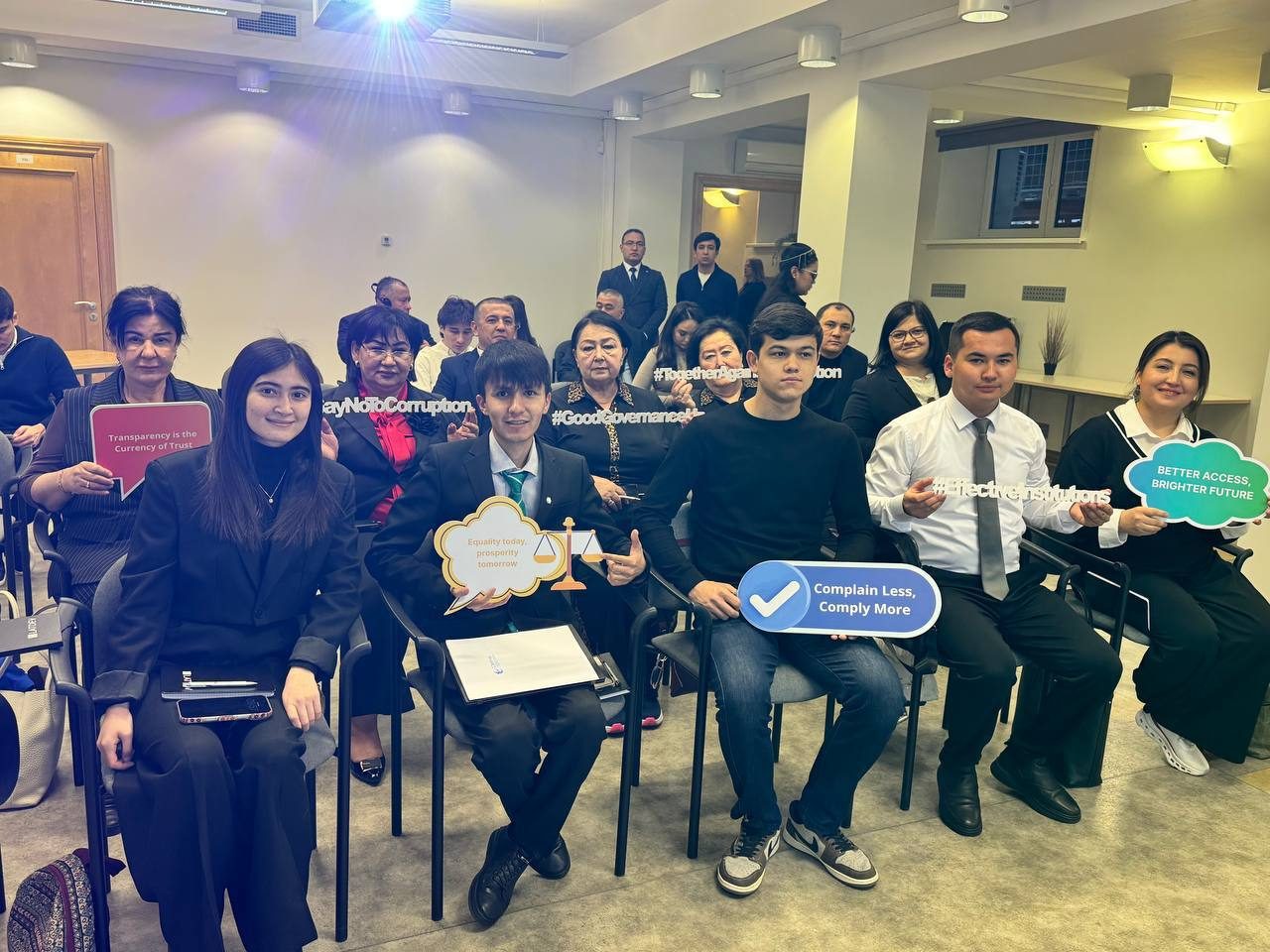
As of 2024, a total of 26,423 non-governmental non-profit organizations (NGOs) are registered in Latvia. In addition, 5 percent of the country’s population (approximately 95,000 people) is engaged in volunteer activities. The experience and practices of promoting civil society institutions and ensuring effective cooperation with public authorities became the central topic of the “Summer School” training programme held in Riga for representatives of Uzbekistan’s civil society institutions.

The programme was organized within the framework of the project “Improving Governance in Uzbekistan – Inclusive Corruption Prevention”, implemented by the Anti-Corruption Agency in cooperation with the European Union, the German Agency for International Cooperation (GIZ), and the Central Finance and Contracting Agency of Latvia. The programme was coordinated by Transparency International Latvia (Delna).
The main objective of the programme was to familiarize participants with Latvia’s advanced experience in the field of civil society development, to study in depth the mechanisms of civic participation, and to assess opportunities for their effective adaptation to national practice.

To this end, more than 10 productive meetings, presentations, and discussions organized over five days enabled participants to conduct a comparative analysis of the anti-corruption experiences of Latvia and Uzbekistan and exchange best practices. In addition, participants acquired new knowledge and practical skills regarding effective mechanisms for involving citizens in public governance processes, institutionalizing public oversight, and applying modern approaches aimed at identifying corruption risks through open data and preventing them at an early stage.

In particular, Irina Melse, Executive Director of the Baltic Human Rights Society, presented the digital platform “Human Rights Guide”. The platform, designed to explain human rights principles through everyday life situations, has already been introduced in 12 countries across the Baltic region and Europe, while cooperation efforts are underway to expand its implementation to more than 20 additional countries. The platform currently has over 2.5 million users.
According to Inese Kuške, representative of the State Administration Policy Department of the State Chancellery of the Republic of Latvia, civil society representatives in Latvia are involved in decision-making processes on a legislative basis. While public participation in this process amounted to 20 percent in 2023, the country plans to increase this figure to 25 percent by 2027.

A Public Advisory Council was established under the Corruption Prevention and Combating Bureau (KNAB) in 2004, and currently includes representatives of 15 NGOs. During meetings with KNAB representative Ayvars Rapša and Chairperson of the Public Advisory Council Ayvars Borodkovs, the parties extensively discussed Latvia’s experience in taking public opinion into account in shaping anti-corruption policy and ensuring broad NGO participation in this process.
Members of the delegation also met with Kristine Zonber, Director of Civic Alliance Latvia. The alliance has more than 140 members and represents approximately 70 percent (around 70,000 individuals) of persons involved in civil society organizations in Latvia, as well as 11 percent (27,500 individuals) of the Latvian diaspora abroad.
Arturs Bikovs, researcher at Transparency International Latvia (Delna), provided information on public monitoring, identifying corruption risks through open data, and the “Integrity Pacts” mechanism. Integrity Pacts are agreements concluded between contracting authorities (public institutions), tender participants, and independent civil society observers in order to prevent corruption in public procurement and large-scale projects.

The researcher also explained the importance of data openness in combating corruption through the example of the Lustre platform. This system consolidates public procurement data, political finance information, lobbying activities, and declarations of public officials into a single platform, enabling the identification of suspicious links and connections.
During the training programme, participants also became closely acquainted with the activities of the “ManaBalss.lv” platform, which since 2011 has enabled citizens to submit initiatives with legal force, as well as the Whistleblowing Centre, which provides legal assistance to reporting persons and cooperates with public authorities to ensure their protection and safety.

In addition, participants studied the activities of the Society Integration Fund (SIF) of Latvia. Established in 2001, the Fund manages not only state budget resources but also financial assistance provided by the European Union and other international donors, directing these funds toward supporting civil society development. On average, the Fund announces more than 20 grant programmes annually.
As part of a study visit to the Baltic Centre for Media Excellence, investigative journalist and founder of Re:Baltica, Inga Spriņģe, delivered a presentation on the experience of conducting major international investigations, as well as on contemporary journalism and public oversight practices. Participants also showed particular interest in the activities of the Riga Neighbourhood Residents Centre, the population advisory councils operating in the Kuldīga Municipality, and the Kurzeme NGO Centre, which are recognized for their advanced practices in supporting NGOs and civic initiatives.

Following the programme, representatives of Uzbekistan’s civil society institutions developed concrete proposals and initiatives aimed at strengthening cooperation between public authorities and NGOs, introducing effective financial and organizational mechanisms for supporting civic initiatives, and expanding public participation through digital platforms.
At the same time, practical measures were identified for incorporating the knowledge and experience gained during the programme into national practice, including improving the activities of public advisory councils, strengthening public monitoring mechanisms, developing modern digital solutions to support citizens’ appeals and initiatives, and establishing sustainable infrastructure and advisory services for NGOs in the regions.
Press Service
of the Anti-Corruption Agency