
Legality in communication between public officials and entrepreneurs: the responsibilities of anti-corruption internal control units explained

The Anti-Corruption Agency held an online training seminar for employees of anti-corruption internal control units of more than 140 government bodies and organizations on “Communication between public officials and entrepreneurs and internal investigations into violations.”
The event was organized in cooperation with the Business Ombudsman and the Law Enforcement Academy as part of the implementation of the tasks set out in Presidential Decree No. PF–63 of April 17, 2026, “On measures to limit unlawful interference in entrepreneurial activity and enhance the transparency of regulatory inspections.”
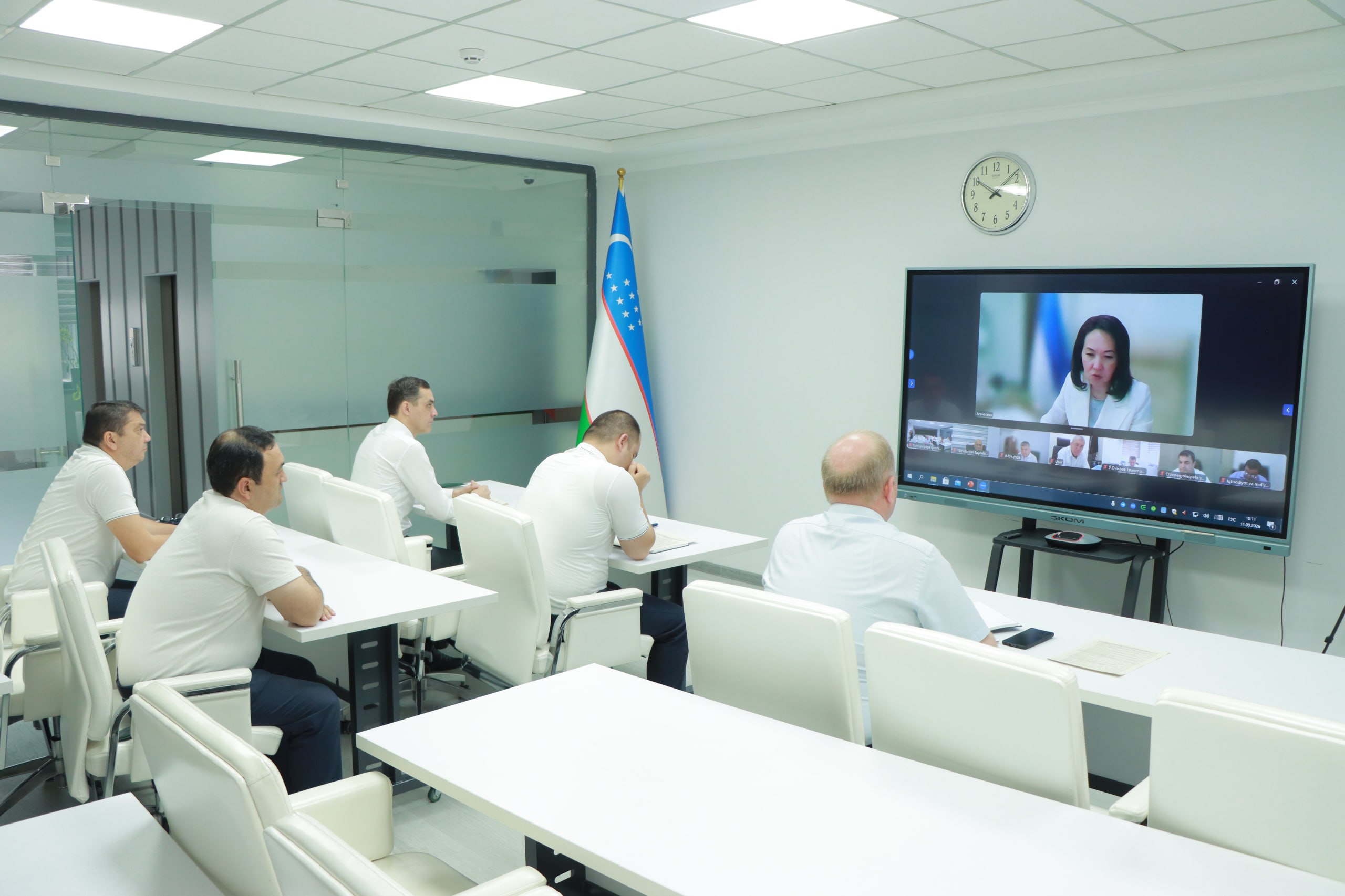
In accordance with the Decree, the anti-corruption internal control unit of the relevant government body is responsible for assessing whether a public official’s communication with a business entity is justified or unjustified.
If a public official engages in unjustified communication with the same business entity two or more times within a year, the internal control unit conducts an internal investigation and takes other appropriate measures.
To this end, the Agency and the Business Ombudsman are currently taking measures to ensure the effective use of the enhanced “Unified State Control” information system and to connect designated employees of anti-corruption internal control units of government bodies to the system.
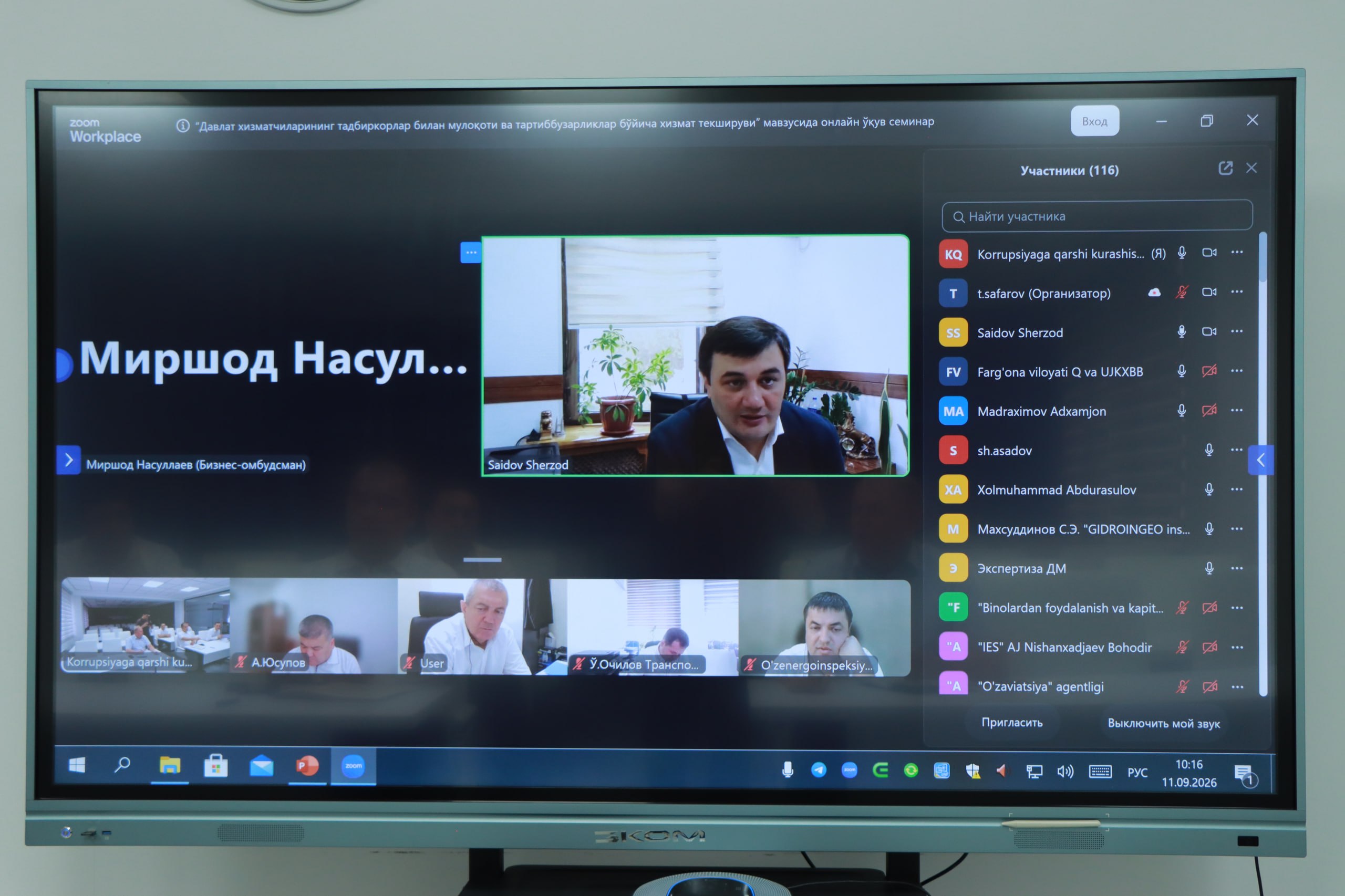
Entering information on communications between public officials and business entities into the information system is mandatory. The Agency and the Business Ombudsman continuously monitor this information. Where provided for by law, the relevant information is submitted to law enforcement authorities.
During the online seminar, participants were provided with a detailed explanation of the responsibilities of anti-corruption internal control units in monitoring communications between government bodies and business entities.
It was emphasized that employees of these units are responsible for monitoring official communications between public officials and entrepreneurs, assessing whether such communications are justified, identifying corruption risks and suspicious circumstances, examining conflicts of interest, organizing internal investigations where necessary, implementing preventive measures, improving relevant processes, as well as providing guidance and conducting training for employees.

Employees of internal control units were also introduced to the procedure for assessing the justification of communications between public officials and business entities that do not constitute regulatory inspections. They were also provided with detailed information on organizing and conducting internal investigations in cases where a public official violates the established procedure for such communications.
The seminar concluded with practical case studies designed to further strengthen participants’ ability to provide legal assessments of communications, identify corruption risks, and make well-grounded decisions on whether to initiate an internal investigation.
Press Service of the Anti-Corruption Agency